

A Second Chance for Two Young Langurs
Every rescued animal has a story. Some stories remind us of the importance of compassion, while others challenge us to rethink our relationship with wildlife.
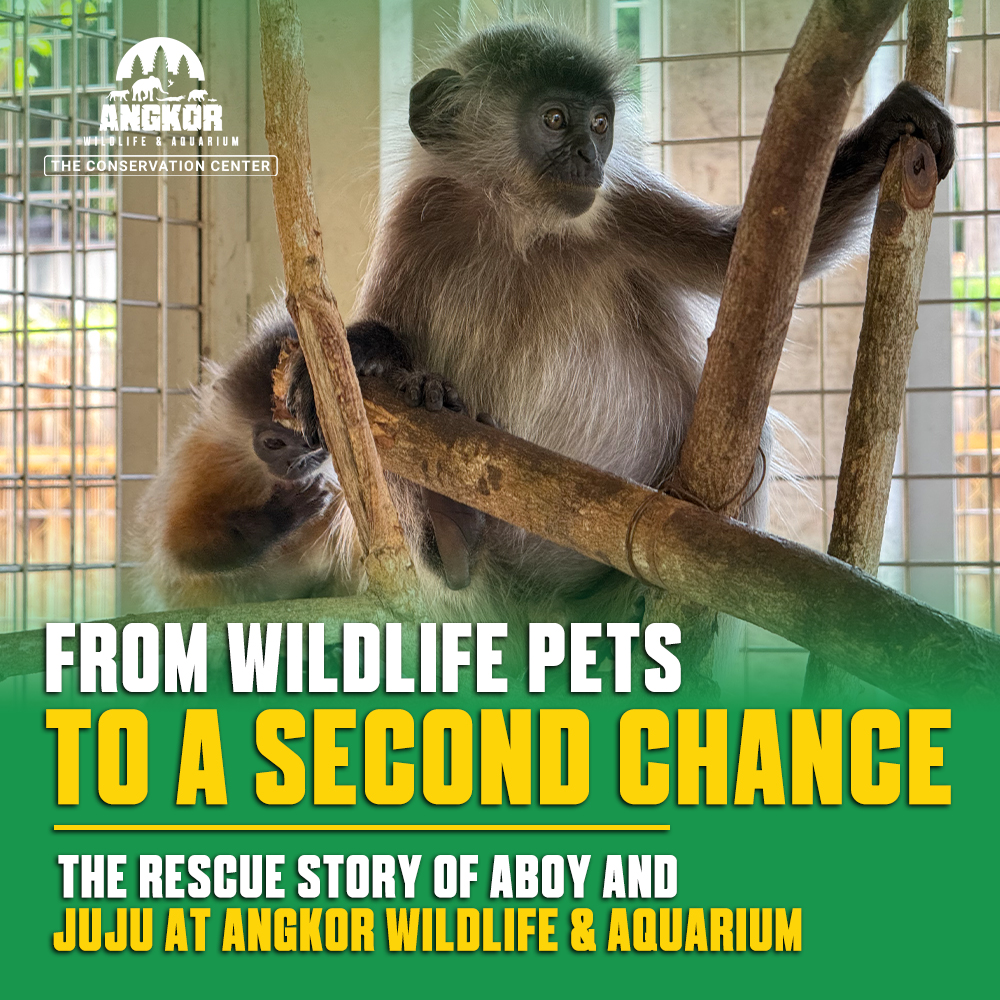
At Angkor Wildlife & Aquarium (AWA) in Siem Reap, Cambodia, we recently welcomed two young Indochinese Langurs (Trachypithecus germaini) into our care: Aboy, a one-year-old male, and JuJu, a four-month-old female.
Both langurs were originally purchased from wildlife sellers at local markets and kept privately before their previous owners made the positive decision to voluntarily transfer them to AWA.
For Aboy and Juju, this marks the beginning of a new chapter—one focused on recovery, appropriate care, and the opportunity to develop natural behaviours alongside their own species.
Giving Rescued Langurs the Care They Deserve
Young langurs depend heavily on their mothers and social groups during their early development. Through these relationships, they learn essential life skills, including communication, food recognition, climbing, and how to navigate their natural environment.
Being separated from their families at an early age can significantly affect their physical and behavioural development.
At AWA, Aboy and JuJu are receiving specialist care from our experienced animal care team, including:
- Appropriate nutrition to support healthy growth.
- Regular veterinary monitoring and health assessments.
- Environmental enrichment to encourage natural behaviours.
- Dedicated attention to their welfare and development.
- Carefully managed social introductions with compatible langurs.
Our long-term goal is to integrate both youngsters into a suitable social group, allowing them to develop important social relationships and express behaviours natural to their species.
This process requires patience, professional care, and careful observation to ensure their long-term wellbeing.
Why Wild Monkeys Should Never Be Kept as Pets
The stories of Aboy and JuJu highlight a serious conservation concern: the trade and keeping of wild primates as pets.
Baby monkeys may appear small, cute, and manageable. However, as they grow, their complex physical, behavioural, dietary, and social needs become increasingly difficult to meet in a domestic environment.
Langurs are intelligent, social animals that need companionship from their own species, opportunities to climb and forage, and sufficient space to express natural behaviours.
Keeping them as pets can lead to stress, behavioural problems, and poor welfare.
More importantly, the demand for baby monkeys can encourage the capture and trade of wild primates. Young animals may be taken away from their mothers and family groups, sometimes with devastating consequences for adult animals.
Even purchasing a monkey with good intentions can unintentionally support this harmful trade.
The best way to protect wild animals is not to buy them, but to leave them in their natural habitats.
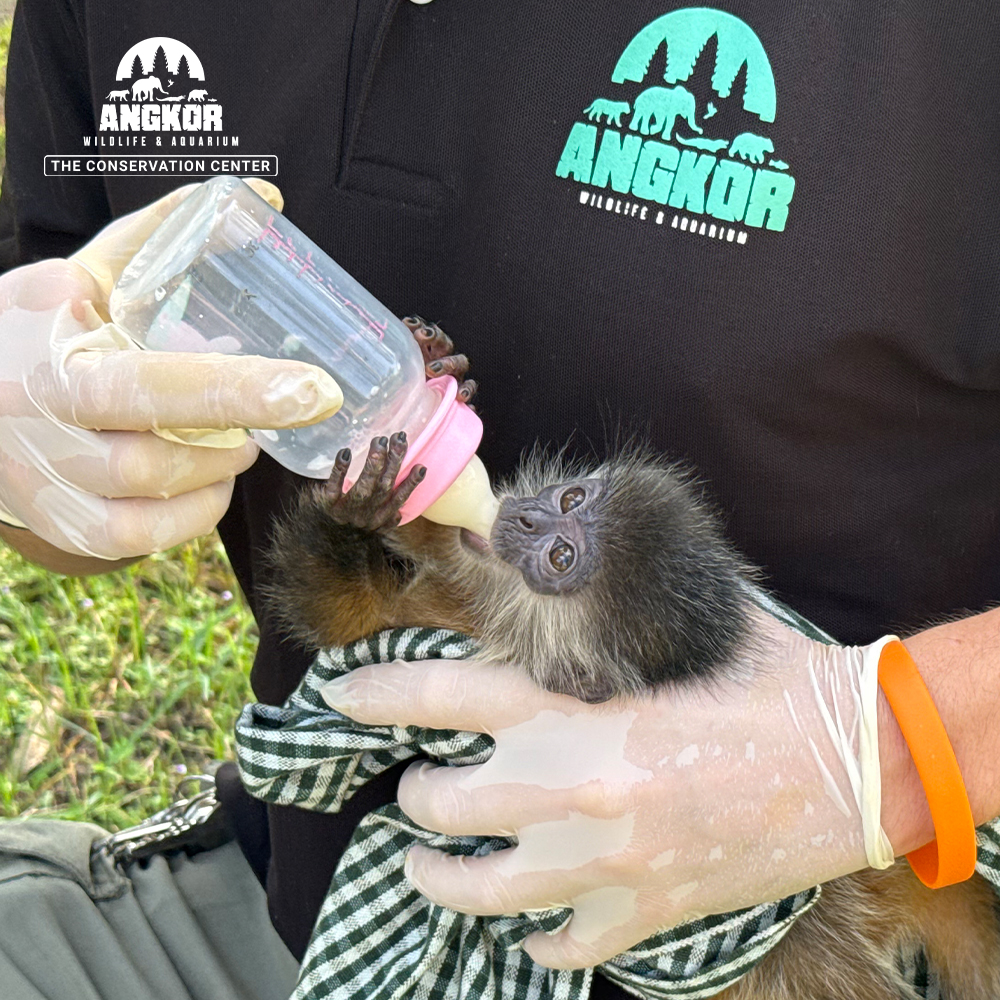
Why Returning Rescued Primates to the Wild Is Not Always Possible
Returning rescued wildlife to its natural habitat is often a preferred conservation outcome. However, this is not always safe or appropriate for primates that have spent their early lives in human care.
Young langurs learn vital survival skills from their mothers and social groups. Without these experiences, they may struggle to identify suitable food, recognise predators, communicate with other langurs, and navigate their natural environment.
Human-raised primates may also become accustomed to people, making them vulnerable to conflict, injury, or recapture if released.
For animals that cannot safely return to the wild, professionally managed facilities can provide long-term care, social opportunities, and environments that encourage natural behaviours.
At AWA, every decision concerning Aboy and JuJu’s future will be guided by their individual needs, welfare, and development.
Every Responsible Choice Makes a Difference
AWA recognises and appreciates the previous owners’ decision to voluntarily surrender Aboy and JuJu into professional care.
Their decision has given these two young langurs an opportunity for a better future.
However, rescue alone cannot solve the wider problem of wildlife exploitation. Protecting Cambodia’s biodiversity requires collective responsibility, public awareness, and a commitment to ending the demand for wild animals as pets.
As visitors, families, and members of the community, we can all make a difference by refusing to purchase wild animals, supporting responsible wildlife conservation, and educating younger generations about the importance of protecting nature.
A Future Where They Can Live as Langurs, Not Pets
Aboy and JuJu’s journey is just beginning.
At Angkor Wildlife & Aquarium, we remain committed to providing them with the professional care, attention, and opportunities they need to grow and thrive.
Their story reminds us that responsible wildlife conservation is not simply about keeping animals alive. It is about giving them the opportunity to live with dignity and express the natural behaviours that make them who they are.
Two rescued langurs. Two second chances. One important message: Wild animals belong in the wild.